Sunday, April 30, 2006

Summer snowflake

Here is a simple cream vase of Leucojum aestivum "Gravetye Giant" - it is a bulb that grows in wet meadows from south west Asia to northern Iran - it is supposed to grow even on the margins of rivers and its seed pods are filled with air so that they will float downstream.
It grows very well in Scotland as long as it is in a site that doesn't dry out - the variety I grow is Gravetye Giant - a much taller version that the species which is named after William Robinson's nineteenth century garden in Sussex.

I first saw it used as a cut flower in an article about Shane Connolly - a London based florist I really admire who works with a lot of garden type flowers. His book about the language of flowers even has bouquets of nettles - not that I think that would sell from the van very well. They work really well as cut flowers - probably best displayed on their own in a plain ceramic or glass vase.

Eggs


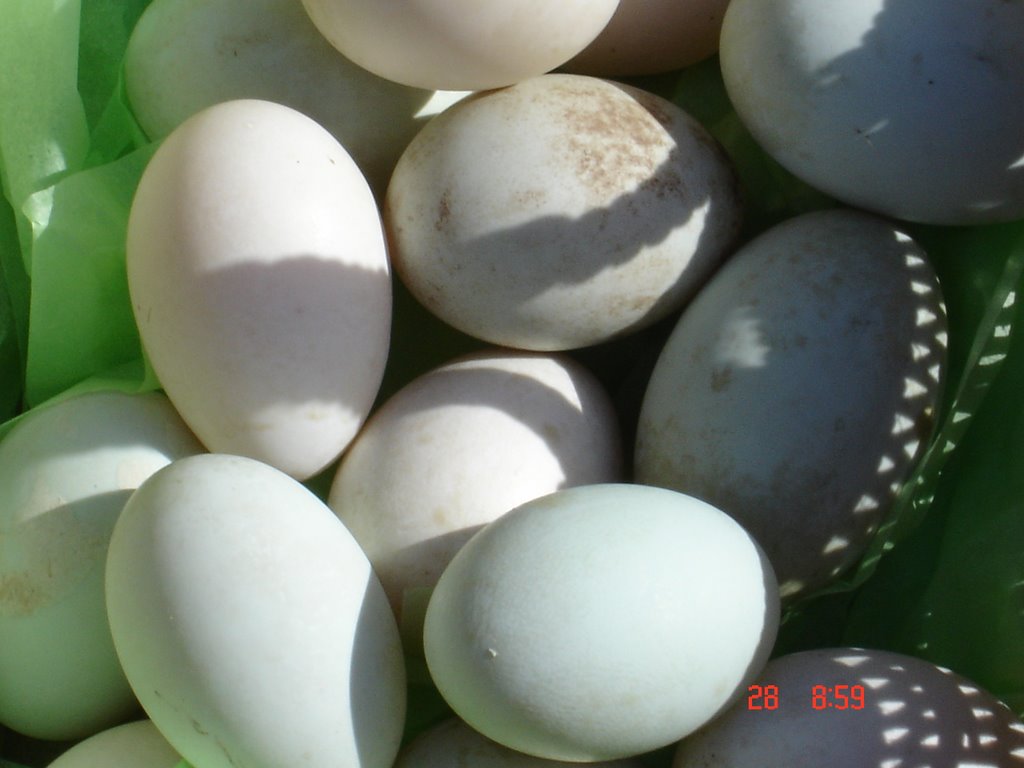
We are now selling hen and duck eggs from Craigievern Farm - delivered here fresh on a Friday.

Friday, April 28, 2006

Thursday, April 27, 2006

Flowers for Friday


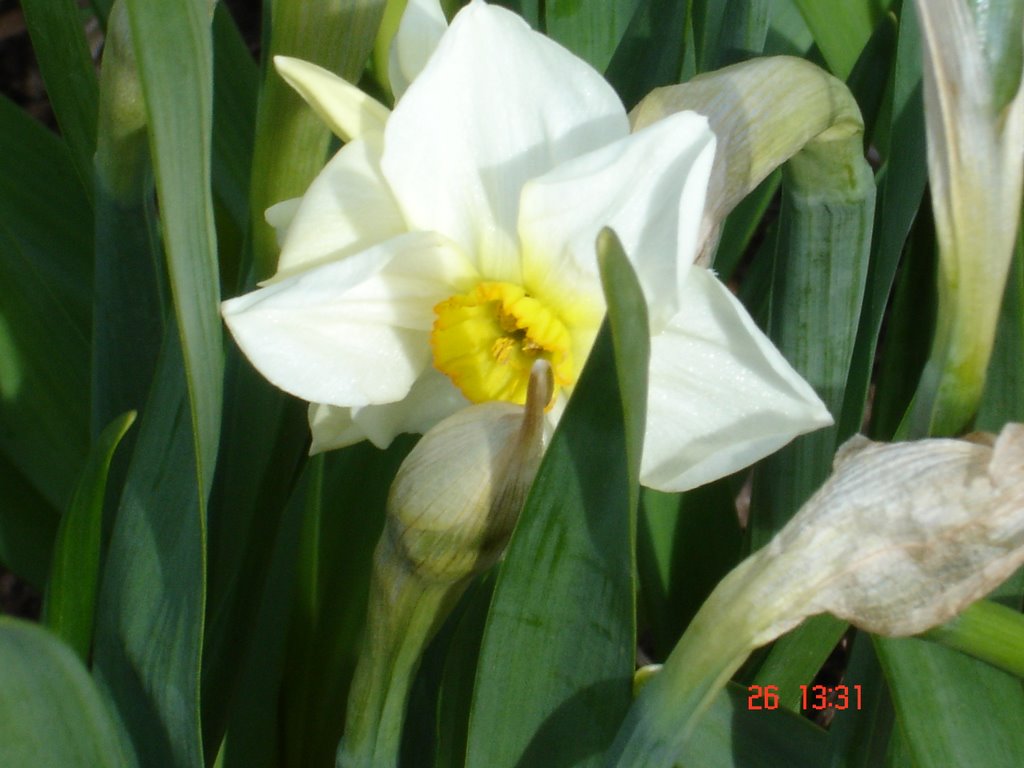
My favourite narcissi is about to bloom - in time for the first batch to be on sale Friday/Saturday. This is Narcissi 'Geranium', a tazetta narcissi with creamy white petals and an orange cup. Each stem has several flowers and a sweet, but not cloying scent. The best thing from my point of view is that it last well in a vase - a week to ten days - and, as long as I condition it seperately - it mixes well with other flowers without killing them.
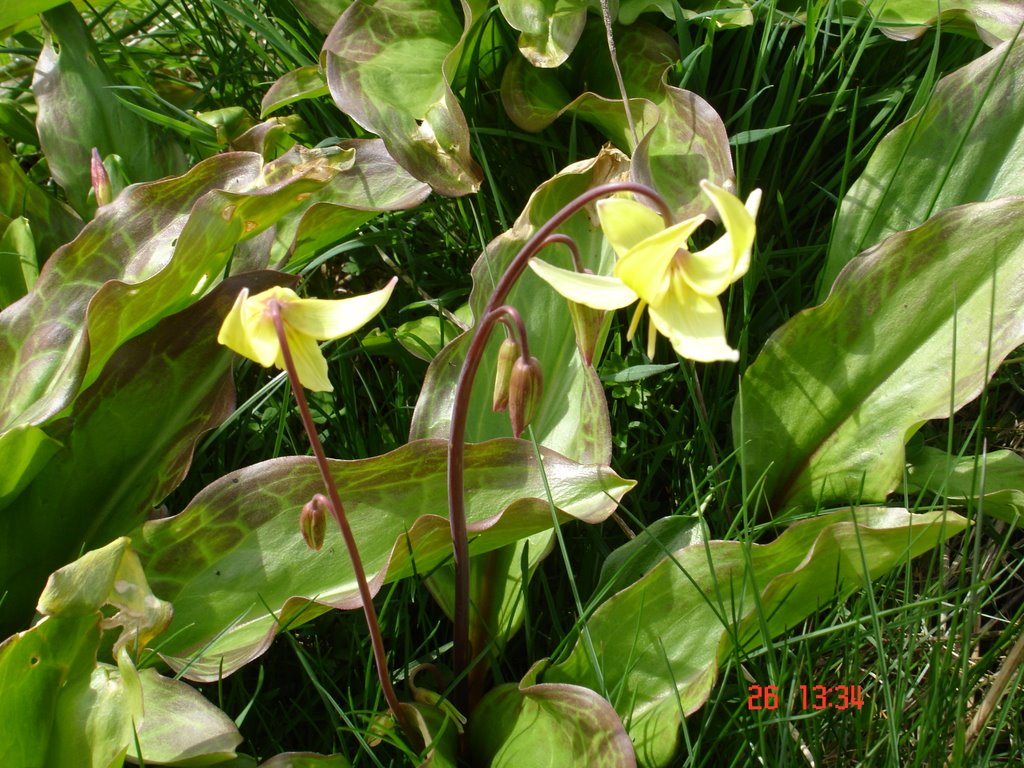
We shall also have tiny woodland gems like erythronium ( pictured above) and the elegant white snowflake as well as snakeshead fritillaries, hyacinths and tulips.

Wednesday, April 26, 2006

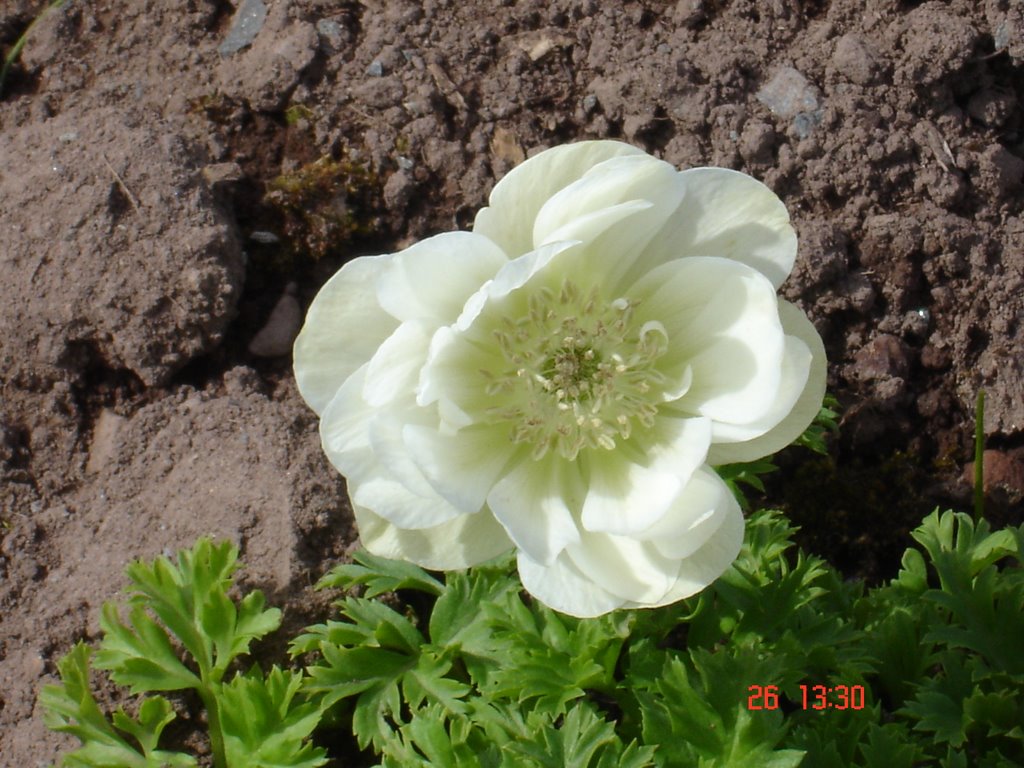
Anenomes


One of the reasons that I think that fresh flowers add something to a room is that they change - they unfurl and grow, they open and change colour. Each time you walk into a room you notice them because they are different (this is also the reason that I think large hotel foyers should have good artificial flowers rather than importing tropical stems - no-one is around for long enough for it to make a difference).
Spring flowers are especially good at changing - often hour to hour, not just day to day - and anenomes are a great example. They look fantastic as a bunch in a coloured glass vase. One downside to the fact that spring flowers continue to grow once cut is that they are INCREDIBLY thirsty - they may need their vases topped up every day. They also benefit from flower food more than summer and autumn flowers as they have so much more to do!
Anenome coronaria originate in the eastern mediterranean, but are quite happy growing here as long as you put them in a sunny spot with lots of drainage. They are picked in bud, or newly opened flower, with quite short stems but will grow several inches over the next week to ten days, opening out large flowers with a central boss which gradually expands into a seedhead.
I grow a white (The Bride), Blue and Pink but stay clear of the reds which are often rather muddy.

Monday, April 24, 2006

Herb beds

I use a lot of herbs in my bouquets - primarily apple and pineapple mint, dill, fennel, rosemary and lemon balm - to add fragrance and a certain country charm. Poppies look fantastic with fennel flowers, and mint covers up any oniony smellsthat might cling to a bunch of alliums.
This year I have decided to move the herbs and inrease the number that I grow so that regular flower van customers can pick their own herbs for using in cooking. This will be one of the perks of this year's loyalty card - the other perks being a free bunch for every 10 you buy and free samples of flowers I am trialling.
It is very difficult to get large bunches of herbs here - the farm shop at France Farm, Gartacharn does great bunches of parsley and coriander on a Friday but no-where seems to sell big bunches of mint or dill. You need a large number of those wee 25g plastic herb packs to make a decent tabbouleh.
We shall have mint, dill, fennel, parsley, rosemary, coriander, sage and lemon balm.

Sunday, April 23, 2006

Our nesting wreath


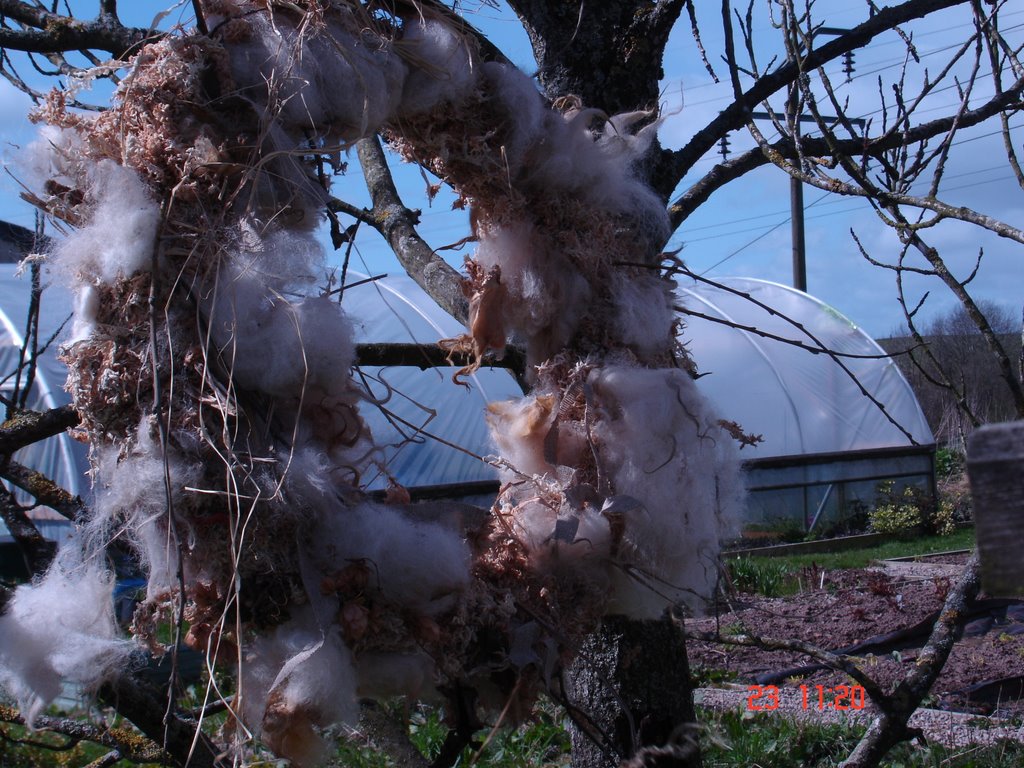
The nesting wreath that we made out of an old Christmas door wreath is now being used by lots of birds - bits of sheepswool, raffia twigs, dried hops and hessian are loosely stuffed into the moss so that the birds can pull them out. The wool is particularly popular.
Last year we used fleeces as to supress the weeds around the bases of our newly planted apple trees - unfortunately one tree was so badly eaten by both deer and hares that it died so, we re-used some of the wool for our wreath.

Friday, April 21, 2006

1st Day open


Well we have had a GLORIOUS sunny day for our first day open - I was able to weed the hedges in between customers and the sun was WARM on my back. We are also opening tomorrow morning 11-1. We have paper white narcissi, butter coloured hyacinths, pink impression tulips and lots of small spring things like pulmonaria and fritillaries.

Thursday, April 20, 2006

Snakeshead fritillaries


The snakeshead fritillaries are now beginning to bloom.
When I was an art gallery curator I worked at the Hunterian Art Gallery at the University of Glasgow. In the collection is a series of watercolour drawings of flowers by Charles Rennie Mackintosh, including one of a snakeshead fritillary.
The drawing is probably the best known of his flower drawings, partly because it is one of the more 'finished' ones, but mainly because the checkerboard patterning on the flower connects in with the checkerboard detailing on many of his buildings and pieces of furniture. Most art and architecture students assumed that Mackintosh had either made up, or at least, exaggerated the check effect as a kind of design statement. In fact, Mackintosh's flower drawings were very accurate botanical drawings and it would have been a perfect copy of a flower plucked from a garden on the banks of the Clyde.
Snakeshead fritillaries are a wild flower native to most of Europe, they thrive in grass which is well drained but which doesn't completely dry out. There are spectacular colonies in water meadows down near Cambridge. Their growth is fantastic - first they seem to writhe around on the ground, all whiplash curves, then they straighten themselves up and produce a thin bud which elongates into a snakeshead then opens out into a bell. As well as the purple and white checks there are white and pale purple flowers.

Wednesday, April 19, 2006

mini tunnels


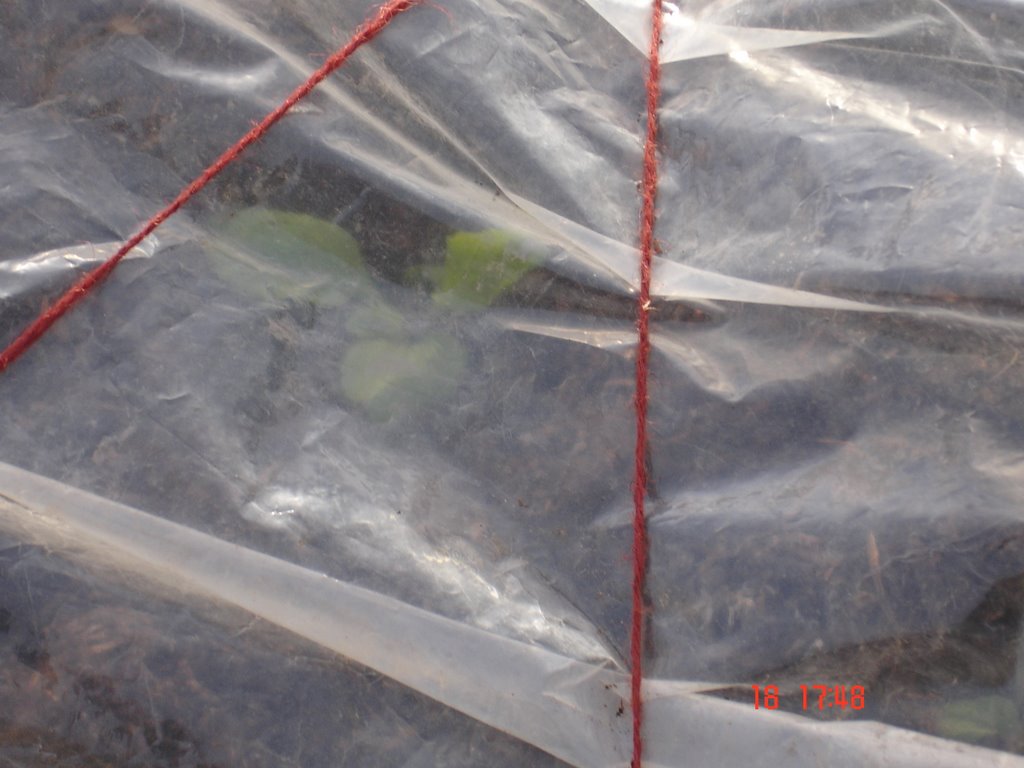
The winds have dropped and I have finally managed to plant out some seedlings from the tunnels and protect them with mini plastic tunnels until they acclimatise. Though we have growing space in our main tunnel, we do not really have proper hardening off space so seedlings have to go straight from the tunnel into the ground. The problem isn't really temperature - the tunnel is unheated so the nighttime temperatures are low - it is the wind which can dry out and damage the tender leaves. By covering the seedlings for a week or so with miniature tunnels they get well established and more able to cope with the Scottish weather.
The tunnels are a series of metal hoops - these come as straight rods with loops about 4 inches from the ends and the first year they are bent into beautiful arches which are then covered with clear polythene tied with criss-crossing string through the loops. Unfortunately storage overwinter always seems to distort the hoops and mine - which are now 4 years old - are very odd shapes and my tunnels hardly things of beauty.
The wonderful thing about the design however is that the tension between the string and the hoops allows me to push up the sides of the tunnels during the day to let air through and gradually harden off the plants. In this way they are far better than the extendable plastic cloches in gardening catalogues.
Each year I intend to use these tunnels in a more efficient way - warming up the soil early in the season, growing late salads etc. However the gales that whip up from the glen are always a problem as it is easy for the wind to whip the hoops out of my well dug soil. Perhaps this year I will make a very sheltered enclosed area with wattle fences and have a go at extending the season.

Saturday, April 15, 2006

Spring bulbs


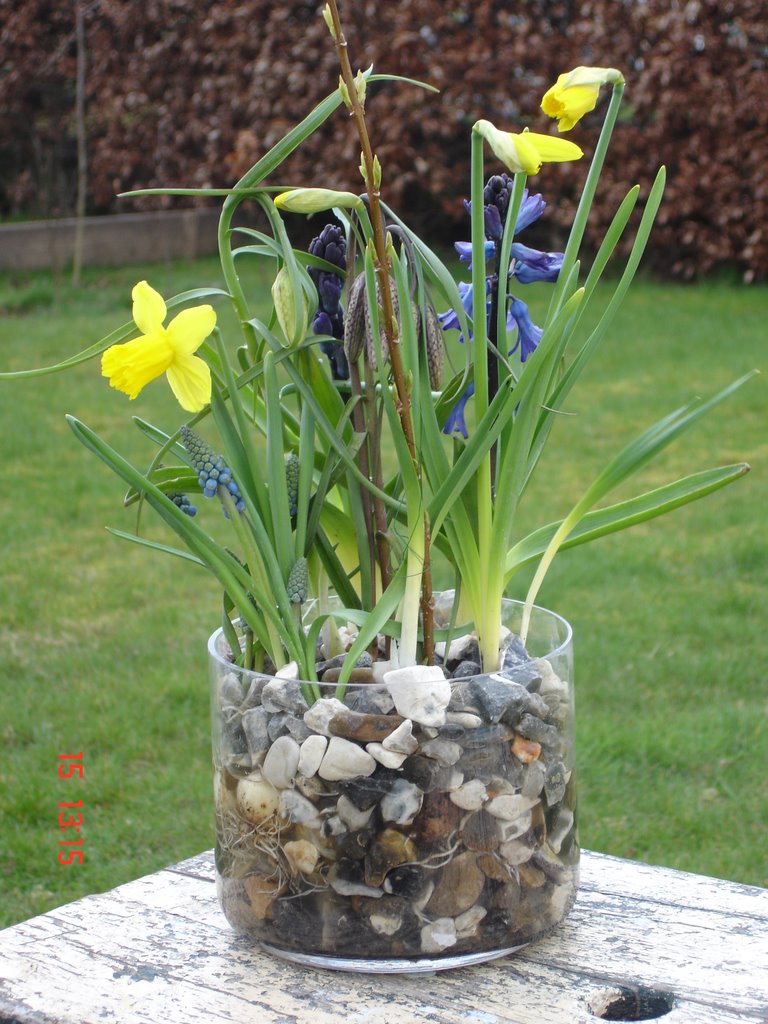
Today I have been planting up some glass cylinder vases, filling them with the type of small spring bulbs that repay close attention - miniature narcissi, ready to open their trumpets, white and checkered snakes head fritillaries, vibrant grape hyacinths, and, for a heady scent, roman hyacinths, more delicate than the usual garden variety.
As all these are hardy, they can be planted outside after the flowers fade and will bloom again next year.

Thursday, April 13, 2006

Looking back at last year


The rotten weather continues and I am turning into a complete whinger about it. I thought that I would post a photo from the end of last season to convince myself that flowers DO grow in Scotland.
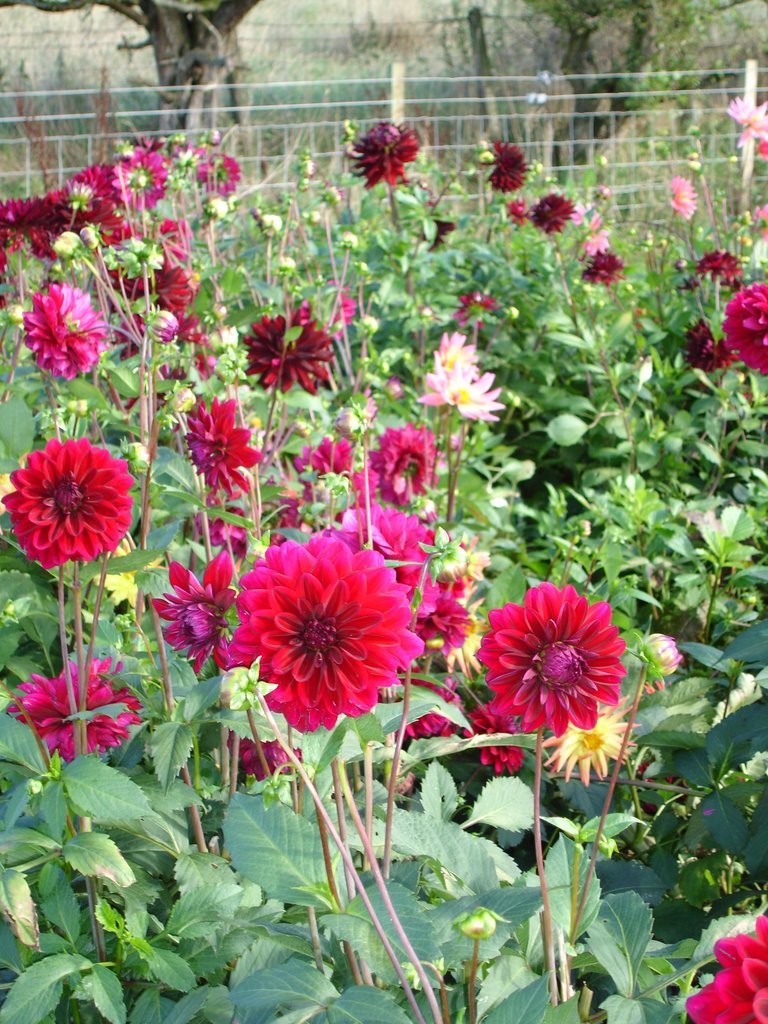
This is the dahlia bed, photographed at the end on September/beginning of October in the foreground in Dahlia Naomi, in the background Dahlia Chat Noir with the odd White Star in the middle.
As you can see I grow the dahlias here without any fancy techniques - the tubers either overwinter in the ground or get started off in the tunnel. I plant them out with a bit of well rotted manure in May and then more or less leave them to it. They keep producing as long as they are deadheaded and I find that the ones I grow don't need elaborate staking unless they are in a windy spot.
I have begun to pot up this year's dahlia tubers in the tunnel and again I shall plant up a few extras for customers. I shall also have tubers for sale on 21st/22nd.

Wednesday, April 12, 2006

sweet peas - planting out


Today was another horrible horrible drizzly, freezing winds sort of day. However, there have been too many of those lately, so there was no chance to hide inside in the warmth and sow seeds - it is time to get out and get wet.
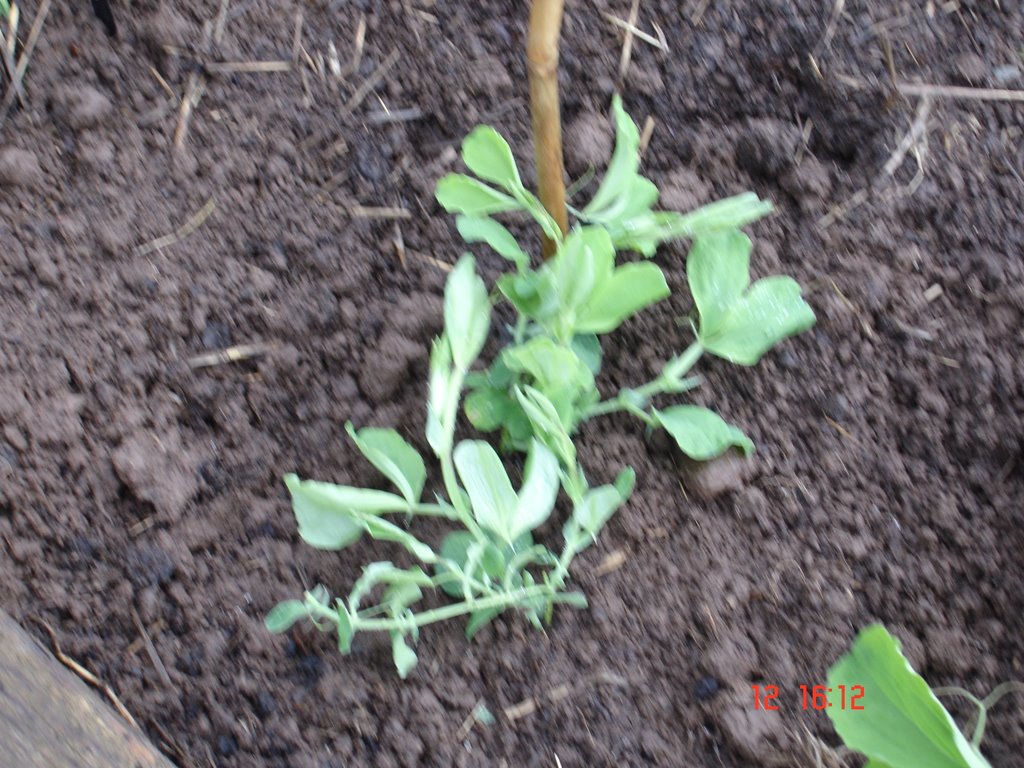
Edward (left) was todays star wet worker getting the wood ready for the new raised beds while I planted out the sweet peas.
We sow our sweetpeas into plastic roottrainers in the early autumn. Root trainers are almost like books of hinged pots which fit together into a plastic tray. The long ridged pots encourage the roots to grow straight and strong and the gap in the base means that the roots are air pruned - i.e. tips die off when the hit fresh air and the message goes back to the main plant to send out more and more roots so you get masses of straight healthy roots without any roots circling round and round. This means that the roots are ready to grow and explore when potted on or planted out. The plants are potted on - 2 going into each 2 litre pot just after Christmas - I use a long pot really intended for roses as it seems that the longer the root run, the better the sweet pea plant - and then planted out in early April.
Autumn sown sweetpeas are almost a different plant from spring sown ones - they romp away and begin to flower as early as May - they don't need cossetting as their roots are strong enough to get all the water they need and will keep churning out flowers until August.
I had intended to sell some of my sweetpea plants at the Country Living Fair, but decided at the last minute that the stall was crowded enough. I shall have them here when we open up again on 21st and 22nd April.

Tuesday, April 11, 2006

Chickens and rabbits


The hens are now laying at full capacity - a great relief, as Craig, who sold us the chickens, has been warning us that no good will come of the unnatural set up we have created.
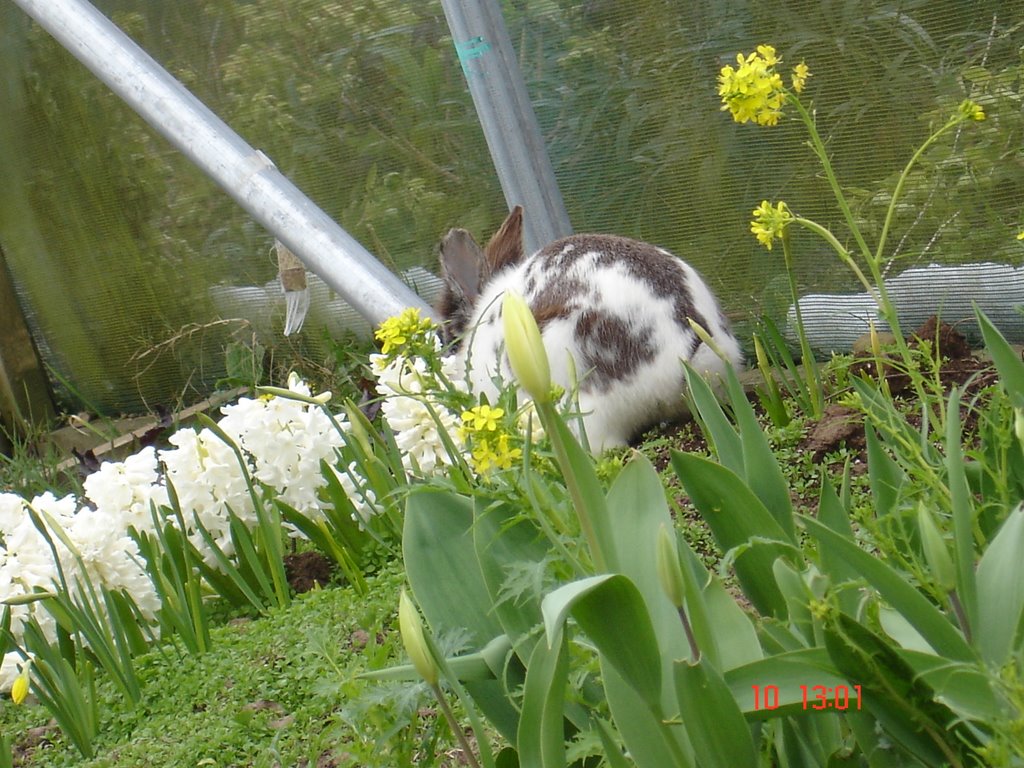
Last Easter Zoe got a lion head rabbit called Cuddles (pictured above on an escape mission to eat the salad in the tunnel) and a guineapig. They were happy together until the guineapig died over the winter and we were stuck with a mumpy pining rabbit.
When we made the chicken run we decided to put cuddles in there to test it for escape routes and to give him a bit more freedom. When the chickens arrived the next week we thought that it would do no harm to let Cuddles stay and see whether hens and rabbits can live together.
Well . . .they can - but now Cuddles is convinced that he is a chicken, or more to the point - a cockerell. He has 5 hen girlfriends - to whom he is VERY attentive - he scratches for food and this week has taken up dustbathing. He seems to be happy, the hens seem to be happy - they just walk off when he becomes too 'active'
The only downside so far is that he has bitten off some of the hens' feathers in a preening session. This seems to have stopped - no more feathers in the hen house - but the hens look a bit tawdry.
Craig is still sucking his teeth. I think he regrets selling his hens into such an unnatural chicken run. Very appropriate for Easter though.

Saturday, April 08, 2006

Building site

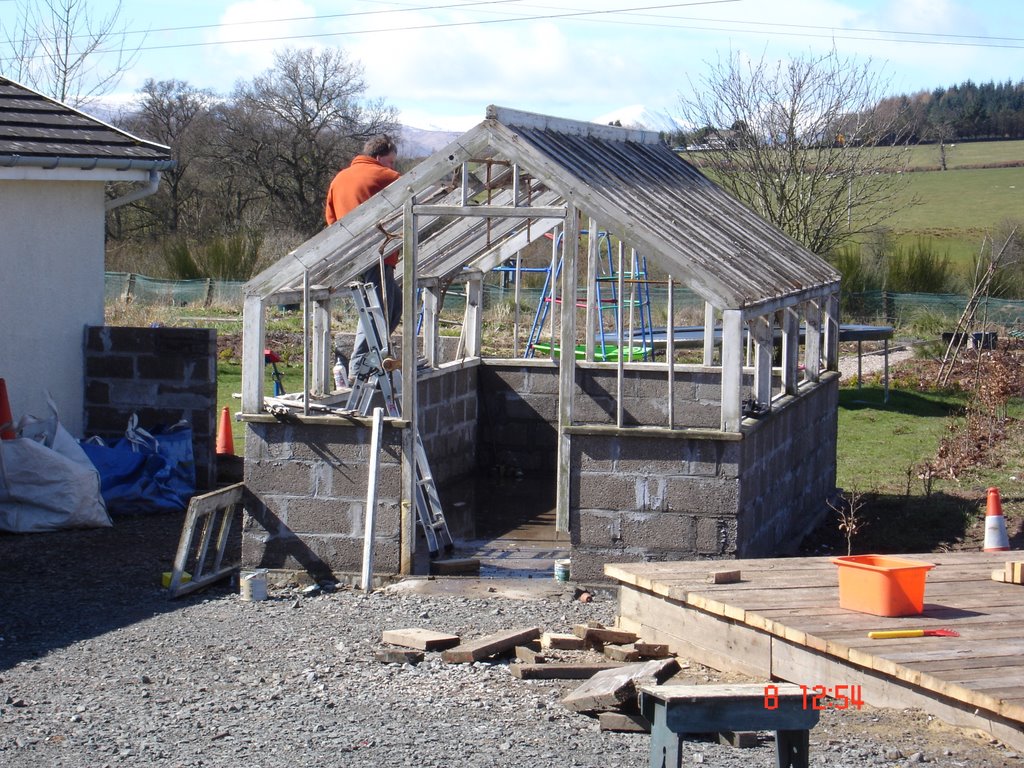
Work continues on the new greenhouse - most of the wooden frame is now up - it is really a case of sanding down the old paint, getting rid of any rot and patching it up with lots of woodfiller. I suspect that getting the plinth built and putting up the frame will be the fast bit.
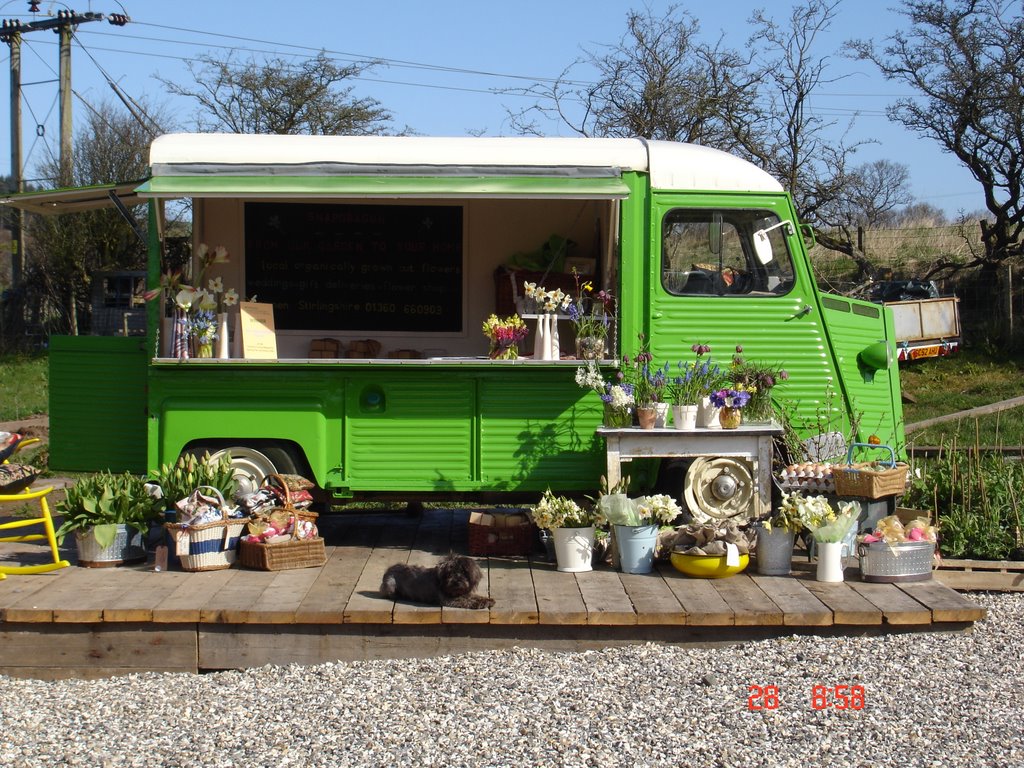
Euan has also built a deck to the right hand side which will take the van and give an easily swept area to the front of it. It will also give me different levels for my buckets of flowers and should look a lot better than last year. The deck is made from reclaimed roofbeams which we bought from Hargreaves reclamation yard in Airth. We have also used them for all the raised beds. They come peppered with small and large nails but have a great weathered look, they are local and 'eco' and they have not been treated with any nasty chemicals. The downside is that they are not pressure treated with a preservative so we do not know how long they will last - the wood is certainly good quality - good and dense - and we intend to nail a strip of copper over the cut edge.
The gravel should arrive next week and hopefully the area will transform itself from building site to drive/courtyard/flower shop.

Friday, April 07, 2006

Dull & dismal

It has been a sort of nothing day today - lots of heavy rain without the mitigating sunshine. The overnight deluge left the soil too sodden even for weeding, and all plans for putting up the plastic cloches were abandoned due to the wind. I have been wimping out and spent the day making soup and planting seeds in the kitchen
Euan and Edward manfully continued prizing the nails out of the reclaimed roofing beams we are using as timber and even managed to make a couple of raised beds. I don't think it was the most enjoyable day's work.
We have also been pondering about how we will cope with getting the chickens indoors if it becomes necessary. The original idea had been simply to move them to the polytunnel but, by May, that will be getting too hot. We shall perhaps devise some netting cover for part of the existing run. I am very reluctant to curtail the chicken's freedom too much.

Thursday, April 06, 2006

Tulip Fire


Last year the fungal disease 'tulip fire' effected most our tulips - their leaves went blotchy and all dark coloured flowers had horrible pock marks on their flowers. I took advice and dug up all the bulbs. Or at least I though I had. Unfortunately - like old potato crops - every bit of bulb mistakenly left in the ground has sent up shoots.
This is partly the disease - one of the signs is the appearance of very early, very thin shoots which rapidly turn mouldy in humid weather and then spread the infection. Another sign is small blotchy spots on otherwise normal leaves - again if there is a bit of humidity these can create mould spores very quickly.
I am now busy digging out all the leaves that have sprouted in the old tulip beds. Part of the problem is that I planted the bulbs very deeply - to make themmore perennial- and then over planted with herbs. Now it is difficult to get all the bits of bulb out.
The new tulip beds are far away from the old infected ground and I now plant tulips very shallowly, removing the whole bulb when I pick the flowers. I daren't risk getting more infected ground - a spring without tulips would be unthinkable.

Sunday, April 02, 2006

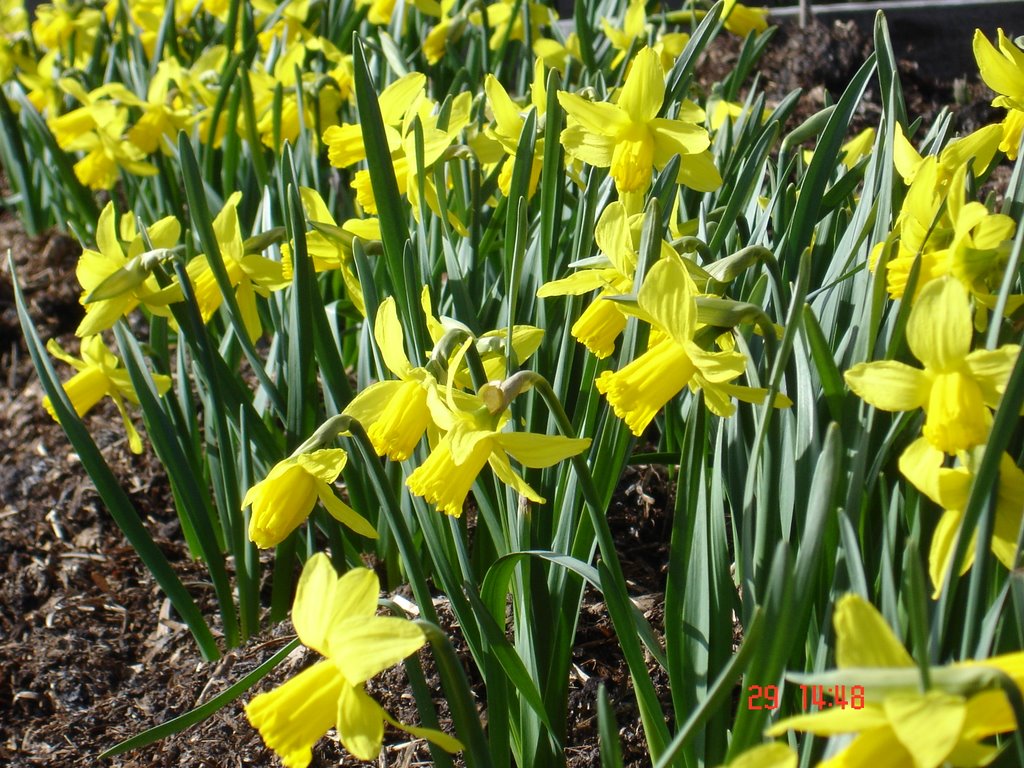
February Gold

Now that we are in April the February Gold daffodills are flowering. These are short neat daffodills with a clear bright colour and are clearly going to be a couple of weeks ahead of the other daffs in the field (the only others in flower are next to the house wall - everything is about 3 weeks later than last year).
I shall probably move the February Gold bulbs after they have flowered as they are obviously going to bloom at a time when I am not selling but too late to be useful for early displays - when I ordered them I envisaged them in large shallow planters with snowdrops, iris reticulata and forced pussy willow branches. I shall perhaps move them to the verges where they will look cheery but not too blowsy.